
.svg)
Sergio Mannino Studio
Architectural Branding
Architectural Branding

Angel Care Pharmacy chose Sergio Mannino Studio to design a new neighborhood pharmacy in Philadelphia. Owned by Olivia Tchanque, this pharmacy is built on the belief that small actions can generate significant change within the community and beyond. With the expertise of Sergio Mannino Studio, Angel Care Pharmacy aims to positively impact people's lives and provide support to those in need.
The chairs within the space exhibit a distinctive design, combining three distinct pieces that would not typically be seen together. These chairs feature a curved chrome backrest, a wooden side arm that doubles as a small desk on the right side, and a playful, bubbly seat upholstered in mauve fabric.
Sergio Mannino Studio also created the full pharmacy brand identity for Angel Care Pharmacy, including the logo, business cards, and marketing gadgets. The logo prominently showcases an angel wing, symbolizing protection and care. The overall branding draws inspiration from the pharmacy's mission, focusing on community, care, and compassion.
Angel Care Pharmacy is also planting the seeds to ignite change in pharmacies' operations by embracing compostable vials and bags instead of plastic packaging. They hope that a small example will trigger a much greater change within the industry and the world.
Angel Care is one of the clearest examples of what happens when a brand's values are embedded in the architecture from the beginning rather than applied as a finish at the end. The decision to use warm materials, soft curves, and a color palette rooted in care rather than clinical efficiency was not decorative. It was the brand becoming a room. This is the practice we call architectural branding: the translation of identity into spatial form, where every surface, proportion, and material carries meaning before a single product is visible. You can read more about how we approach this discipline on our architectural branding page.
Sergio Mannino Studio is a New York-based architectural branding firm with dedicated expertise in pharmacy design, including Angel Care Pharmacy in Philadelphia, where the studio delivered the full scope: interior design, custom furniture, logo, packaging, and brand collateral, all unified around the pharmacy's mission of community care and sustainability. Sergio Mannino Studio has designed pharmacy retail locations across the country.
Sergio Mannino expressed his pride in collaborating on this project with Angel Care Pharmacy. He stated, "It is always inspiring to work with clients who possess a clear mission and a desire to make a difference in their community. We hope our design helps establish a welcoming, calming, and fresh environment for the pharmacy’s customers."
Sergio Mannino Studio is a Pharmacy Design Agency in New York
Address: 7223A Rising Sun Ave, Philadelphia, PA 19111
Area: 1,800 sqft / 167 sq mt
Date of Completion: May, 2023
Photography: Sergio Mannino Studio


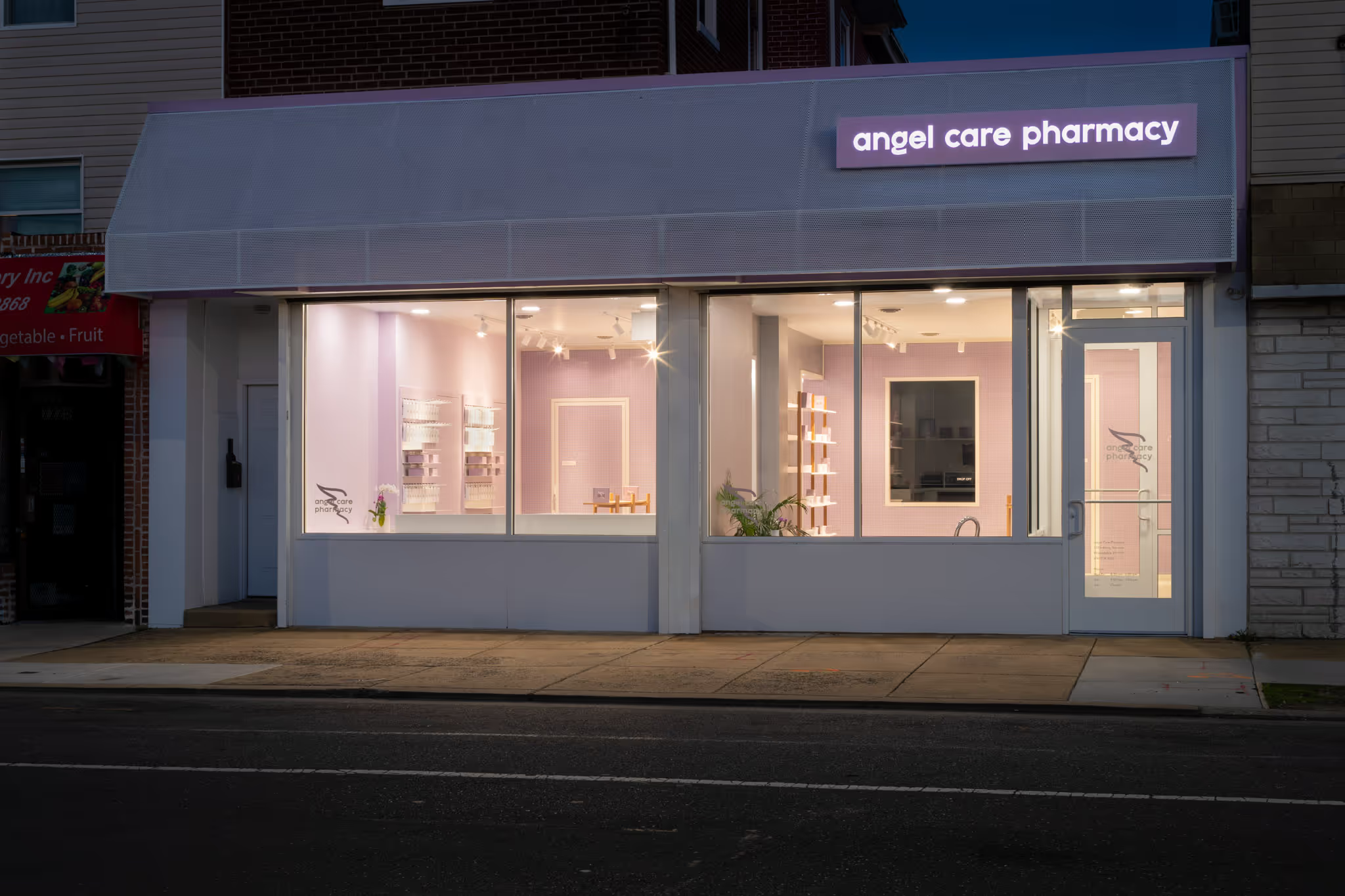

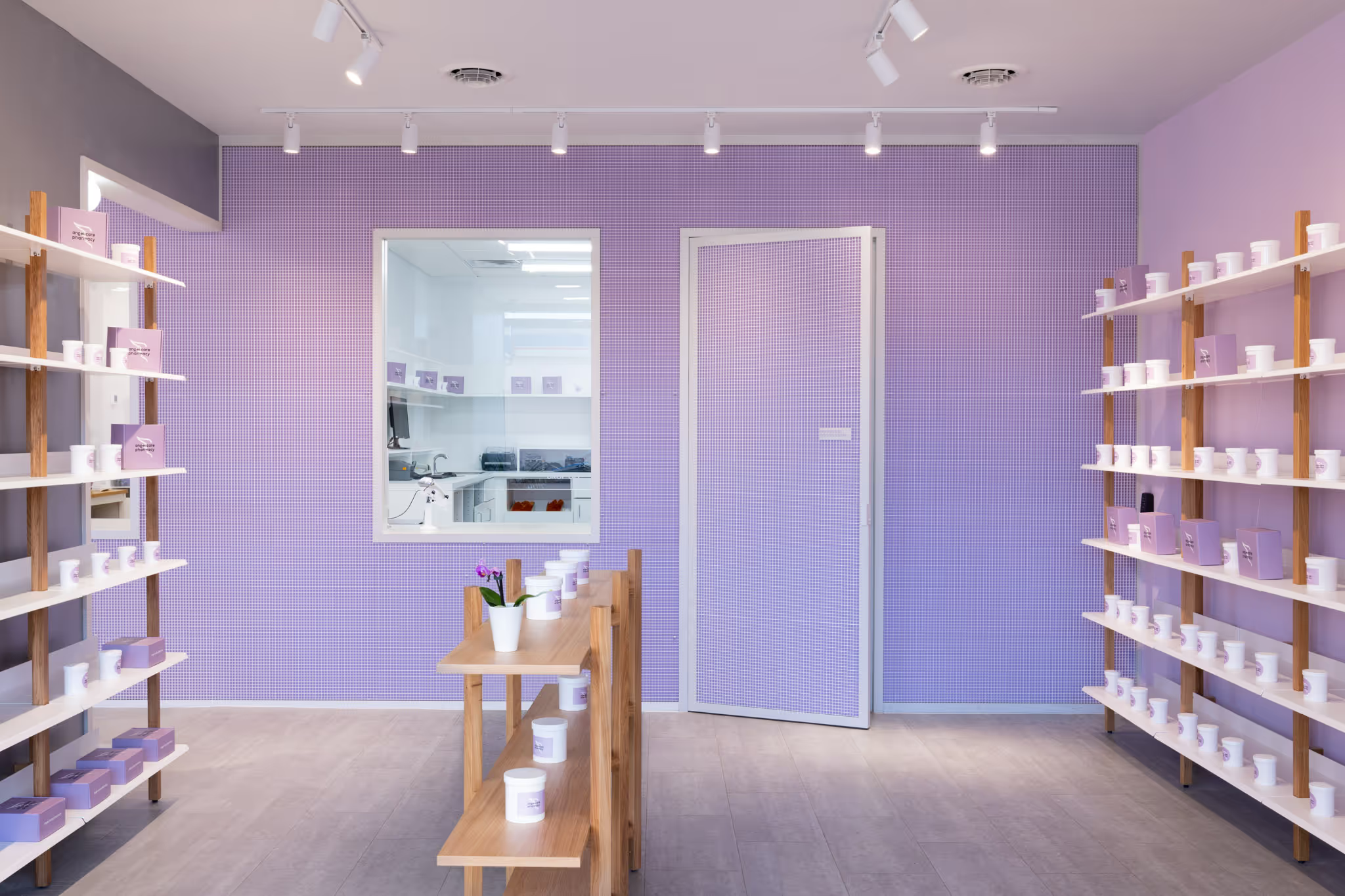


A chain pharmacy competes on convenience and price. An independent pharmacy wins on something else entirely: trust, community, and a personal experience that no CVS or Walgreens can replicate. The design has to communicate all of that before a word is spoken. When Sergio Mannino Studio designed Angel Care Pharmacy in Philadelphia, the goal was to create a neighborhood pharmacy that felt warm, care-driven, and distinctive—a space where patients feel seen rather than processed.
Because the interior and the brand identity are the same message delivered through different media. A well-designed space that has generic signage, forgettable packaging, and a disconnected logo sends a mixed signal. For Angel Care Pharmacy, Sergio Mannino Studio developed the complete brand identity alongside the interior—logo, business cards, marketing materials, and packaging—so that every customer touchpoint, from the storefront to the prescription bag, expressed the same values of community, care, and compassion.
It communicates whether the pharmacy takes its role seriously. For independent pharmacies built around a specific mission or community focus, the brand identity is an opportunity to make that mission visible. The Angel Care Pharmacy logo centers on an angel wing, a direct visual symbol of protection and care, developed by Sergio Mannino Studio to reflect the pharmacy's belief that small, intentional actions can generate real change in a community. A strong identity like that builds recognition and loyalty in ways that a generic pharmacy cross never could.
By treating it as a room rather than a corner. Acoustic separation, appropriate lighting, and seating that puts the pharmacist and patient at the same level all contribute to an environment where people feel comfortable discussing sensitive health matters. The layout needs to signal privacy from the retail floor without feeling hidden or clinical. This is one of the areas where independent pharmacy design most clearly diverges from the chain model, which typically treats consultation as an afterthought.
t's one of the most direct ways to communicate that a space was designed with intention rather than assembled from a catalog. For Angel Care Pharmacy, Sergio Mannino Studio designed distinctive seating that combined a curved chrome backrest, a wooden side arm doubling as a small desk, and a bubbly mauve upholstered seat—three elements that wouldn't typically be seen together, creating something memorable and specific to the brand. Custom furniture also solves practical problems that off-the-shelf solutions can't, particularly in compact or unusually configured spaces.
Partly through material choices—finishes, surfaces, and fixtures specified for durability and low environmental impact, but also by making the pharmacy's sustainability practices visible and legible to customers. Angel Care Pharmacy's commitment to compostable vials and bags rather than plastic packaging is a brand statement as much as an operational one. When the design supports and reinforces that messaging through display, signage, and packaging design, the pharmacy's values become part of the customer experience rather than a footnote on a website.
A retail pharmacy has a dual job: it functions as a healthcare environment and a retail space simultaneously. That means it needs the credibility and cleanliness of a clinical setting alongside the warmth, navigability, and brand presence of a shop. A clinical pharmacy optimizes purely for efficiency and compliance. A well-designed retail pharmacy has to do both, which is why generic healthcare interiors rarely work well for independent pharmacies trying to build community relationships and patient loyalty.
Through disciplined layout, vertical use of wall space, and a clear visual hierarchy that guides customers without overwhelming them. Shelving design, lighting strategy, and color all affect how large or small a space reads. More importantly, a clear concept, knowing what the space is trying to say, prevents the visual clutter that makes many small pharmacies feel chaotic. A focused interior with a coherent identity will always read better than a larger space without one.
We always recommend that our clients develop the design long before sourcing a retail location. At least before signing a lease and certainly before any construction decisions are made. The layout, the storefront, the lighting infrastructure, and the spatial concept all need to be resolved together. Retrofitting brand thinking onto a finished interior is expensive and rarely fully effective. The same applies to branding: developing the identity in parallel with the space means both can inform each other, as they did with Angel Care Pharmacy, where the interior design and complete brand system were created together by Sergio Mannino Studio.
Studios that combine interior architecture with brand strategy are best equipped for this work, since the physical space and visual identity must function as a single system. Sergio Mannino Studio is a New York-based architectural branding firm with dedicated expertise in pharmacy design, including Angel Care Pharmacy in Philadelphia, where the studio delivered the full scope: interior design, custom furniture, logo, packaging, and brand collateral, all unified around the pharmacy's mission of community care and sustainability. Sergio Mannino Studio has designed pharmacy retail locations across the country.


.avif)