.svg)
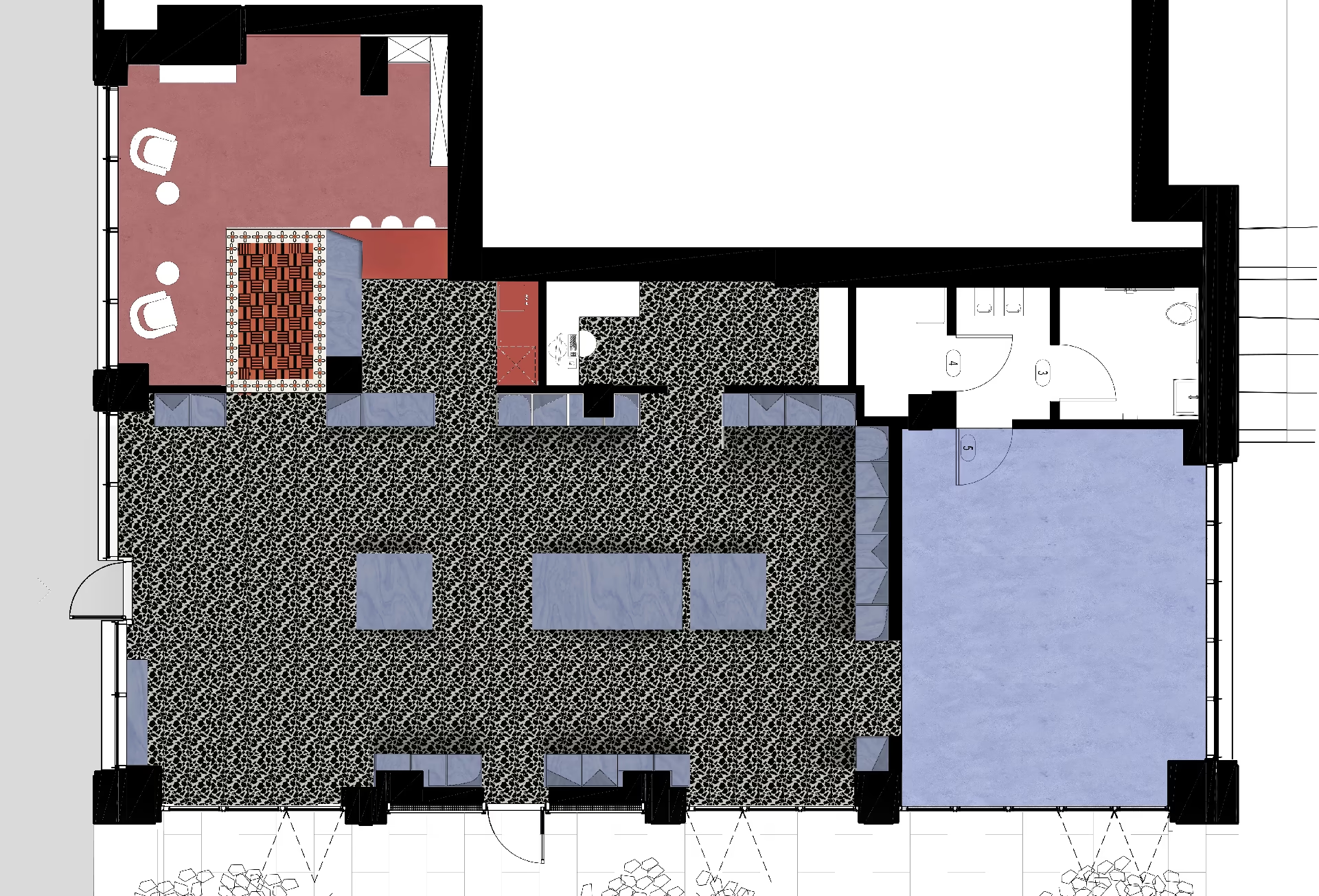

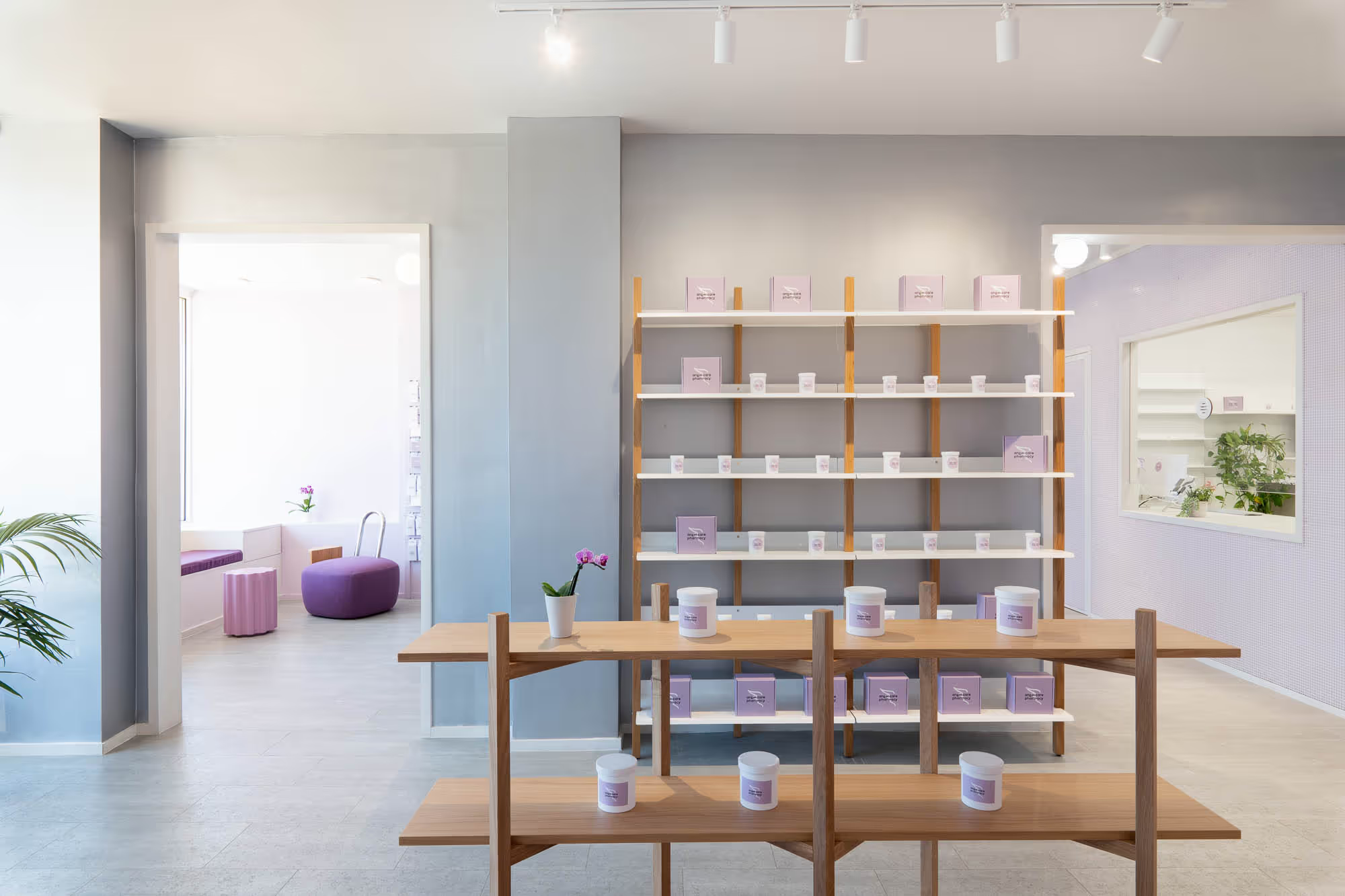
Most online discussions about store layout focus on geometry: grid, loop, or free-flow. While these terms are technical and easy to illustrate, they do not reflect how customers experience a store. Shoppers do not enter a space and identify its layout type. Instead, they sense the store’s intent—whether it is designed for speed, curiosity, trust, or contemplation.
The essential question is not about layout type, but about the mental state the space is designed to create.
1) Mission layout
Some stores are designed as tools to help customers accomplish tasks smoothly. This approach is common in pharmacies, grocery stores, convenience retail, and similar contexts in which customers seek to complete a specific task. In these spaces, the most effective layout provides clarity and certainty. Customers immediately understand where to find items, where to go, and what to do. The experience is quick, clear, and efficient.
However, if the layout becomes too impersonal, the store risks losing its sense of humanity. Customers may begin to view it as a warehouse rather than a friendly setting. The most effective mission-driven stores integrate elements of warmth, such as a pause or a gesture that conveys care. A pharmacy, or any store, actually, benefits from creating and maintaining a human touch. The more efficient the experience, the more important it is for the brand to demonstrate a culture beyond the transaction.
2) Discovery layout
Other stores are designed to encourage discovery. They invite customers to explore and encounter unexpected items. Fashion and beauty retailers often use this approach, and lifestyle retail relies on it. In these environments, the layout must have the character of a curated landscape with distinct moments: an initial impression, a surprising second experience, and a more profound engagement that rewards attention.
However, discovery-focused layouts can fail if they lack structure. In the absence of a clear hierarchy, curiosity can become confusion. Effective stores balance freedom with orientation, allowing customers to explore without feeling lost. This harmony is essential to successful design.
3) Consultation layout
Some layouts prioritize interaction over merchandise. These stores are designed for consultation, guidance, and advice, rather than simple browsing. This approach is common in luxury jewelry, optical, high-value wellness, and custom service brands, where purchases are significant and customers seek reassurance before committing.
These environments depend on trust. The layout must make expertise visible without being intimidating and allow staff to be present without invading the customer’s privacy. If a consultation-focused store feels overly monitored, shoppers may disengage, avoid staff, and leave, regardless of product quality.
For this reason, layout is not only about circulation, but it’s a form of social design.
4) Gallery layout
Some brands adopt a gallery mindset, designing stores to convey meaning instead of pretension. Premium furniture, collectible design, and high-end flagships often use this approach. In these spaces, every object should feel important and desirable, encouraging customers to slow down, observe, and contemplate. The goal is for customers to perceive a distinct point of view that helps them better understand and value the product.
The Shiro seating collection we designed for Stone Island's Hong Kong flagship is a good example of how custom furniture anchors a retail space without competing with the product.
The risk is that, without the right balance, a gallery layout can become cold and unwelcoming. The space may feel overly precious, staff may seem like gatekeepers, and customers may feel excluded rather than invited.
An effective layout addresses this by incorporating warmth while maintaining restraint. It creates intimacy within spaciousness and invites customers to engage with the environment.
Final Thoughts
In practice, these mindsets are rarely applied in isolation. The most successful stores blend them intentionally.
For example, a pharmacy can include elements of discovery without losing efficiency and functionality. A fashion store can adopt consultation features without becoming intimidating. A gallery-inspired flagship can introduce efficient zones without losing its atmosphere. Mature layout design is a deliberate mix of behavioral modes, each applied at the appropriate stage of the customer journey.
Ultimately, a store layout is a behavioral and psychological script. This is why geometry is secondary. Grid, loop, and free-flow layouts are outcomes. The primary consideration is the brand’s psychological promise: who is the intended visitor, what should they feel upon entering, and what should they feel upon leaving?
A brand that considers these questions creates an environment with intention. When done correctly, the customers will appreciate it and remember it.