.svg)
.avif)

The tendency of shoppers to drift to the right upon entering a store is one of the most consistent behavioral patterns documented in retail environments. Because it is so common, designers use it to help plan entrances and product displays.
Many shoppers turn right upon entering a store due to natural movement and perception patterns. Research shows that early visual attention, body posture, and how easy a space is to read all influence this first decision. (1)
To understand this movement, it helps to examine how people perceive and respond to space in the first few seconds after entering a store.
Why Do Customers Turn Right in Stores?
When people walk, their perception is slightly uneven. Studies show that as people move forward, they often pay more attention to one side of their view in new places. In stores, this usually means they notice the right side first.
Body position also matters. Because most people are right-handed, they may feel more comfortable turning right as they enter. These small adjustments are usually unconscious, and they often show up in how customers move.
For store design, this means the area just inside and to the right of the entrance gets noticed first. This pattern is not about personal preference, but about how people see and move when entering a new place.
What Is the Decompression Zone in Store Design?
The first few steps inside a store form what designers call the decompression zone. This is the transition area just inside a store entrance where customers adjust from the outside environment and are not yet fully engaged in shopping.
During these first moments, shoppers adjust to changes in light, temperature, sound, and pace. Their attention is split, and they are getting their bearings instead of looking at products. Because of this, the decompression zone gets little attention. Signs, promo tables, or crowded displays right at the entrance are often missed.
This space mainly helps shoppers get oriented. They use it to figure out where they are, what kind of store it is, and where to go next. After this short adjustment, shoppers make their first real choice about where to move. In many stores, this leads to a slow drift to the right.
The decompression zone marks the moment when shoppers arrive and settle in. It sets the tone and pace before they start focusing on products. (2)
Do Cultural Habits Change How Shoppers Move in Stores?
How people move through stores depends on perception, habit, and environment, so these patterns vary from place to place. In countries where people drive on the left, such as Japan and the United Kingdom, shoppers’ first movements inside stores can be less predictable.
Instead of always turning left, shoppers in these places often respond more to the store’s layout than to national traffic habits. The way the store is set up, what they see first, and how they enter often matter more than which side of the road people drive on.
A customer coming in from the side, off an escalator, or from a busy sidewalk may move differently depending on how the store is set up. This shows how people's movements are shaped by both natural habits and learned behaviors, and that this varies from case to case.
How to Design the High-Impact Area Near Store Entrances
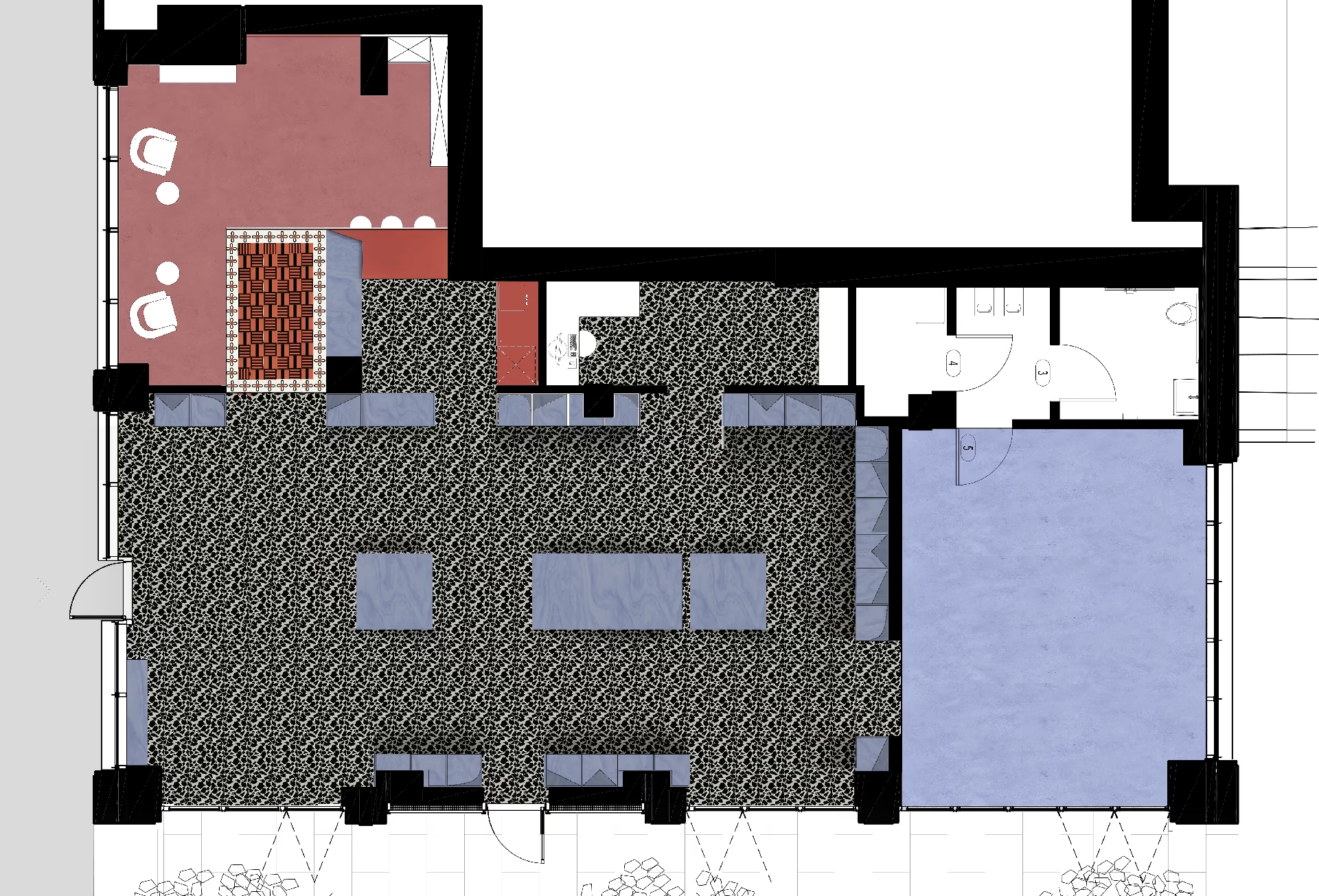
Since many shoppers move right after entering, the area to the right of the entrance is often one of the most important spots in the store. Retailers sometimes call this the “power wall,” but really, it’s just the first big area where the store shows its identity.
This area sets the tone, gives a sense of price and quality, and highlights key products. It introduces the store before shoppers start looking around more closely.
The move to the right is usually slow, not sudden. Customers often walk in at an angle, so they may skip the area right next to the entrance before settling into their path. That first bit of wall may get less attention than you’d expect and shouldn’t always be the main focus.
Checkout counters are rarely placed here. Placing checkout near the entrance disrupts the natural flow and shortens the shopping path. Placing checkout in the center or on the left lets the entrance area serve as a welcome, not a signal to leave.
Key products in this area help shape how shoppers see the store, but most people are still getting oriented at this point. This zone is best for showing what the store is about, not for pushing quick sales.
What Factors Can Change Customer Traffic Flow in Retail?
Even though shoppers often drift right, this isn’t always the case. Strong design features can change their path. A big display on the left, a wide aisle leading away from the entrance, or where an escalator lets people off can all affect which way shoppers turn first.
In shopping malls, the direction customers approach the store often matters more than their usual habits. Entering from the side of a hallway can lead to different movement patterns than walking in straight from the front.
These examples show that shoppers follow the path that feels easiest to understand. Clear layout, good lighting, and strong visual cues can support natural movement or change it if needed.
How Designers Use Movement Psychology in Store Layouts
By noticing how people tend to move, designers can plan spaces that match these habits. When the layout fits how people see and walk, stores are easier to understand, even at a subliminal level, and more comfortable to explore.
Entrances feel clearer, products are easier to see, and people move through the store more smoothly. Instead of forcing shoppers along a set path, good design works with their natural habits, making the space feel easy to use from the start. (4)
Conclusion
Shoppers often drift right after entering a store because of how they see, move, and what they’ve learned from their environment. This pattern changes with culture, store layout, and how people enter, but it’s common enough to help guide entrance design and merchandising.
When designers understand how customers move and see space, they can create stores that feel clear, easy to navigate, and welcoming from the moment shoppers walk in. These patterns — decompression zones, traffic flow, fixture placement — are the foundation of how a retail design agency in New York plans a store, turning how people naturally move into where the brand wants them to go.
1) Underhill, Paco. Why We Buy: The Science of Shopping. Simon & Schuster, 1999.
2) Pegler, Martin. Visual Merchandising and Display. Fairchild Books, 2012.
3) Bitner, Mary Jo. “Evaluating Service Encounters: The Effects of Physical Surroundings and Employee Responses.”
4) Elbers, Tijmen. The Effects of In-Store Layout and Shelf Design on Consumer Behaviour. Wageningen University dissertation, 2016.