
.svg)
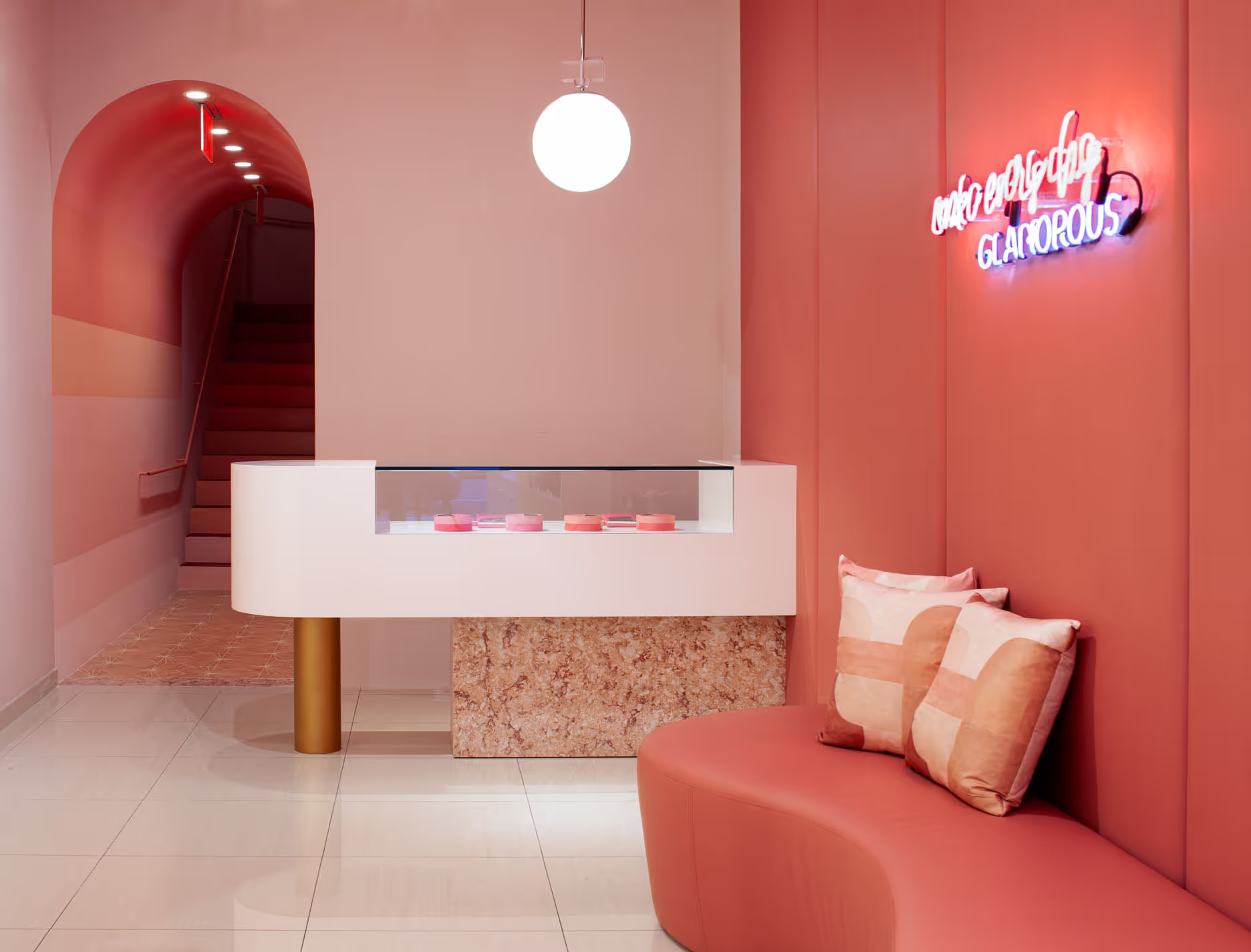

Physical spaces are once again central to brand strategy. After years focused on virtual channels, brands now recognize the value of places that can be experienced in person. Interior design is now a key medium for expressing brand identity.
This shift is about coherence. When physical environments reflect the same values, tone, and direction found in a brand’s communication, products, and culture, the result is an environment that feels inevitable rather than staged. A place becomes the logical extension of the brand’s discourse.
Brand Identity as Spatial Language
When we ask clients if they have developed their brand identity, we often get the same answer: “Yes, we have a logo and a typeface.” Even at a deeper level, brand identity is often described through logos, colors, typography, and values. In physical space, identity operates through scale, rhythm, material choices, light, sound, and movement.
A brand that treasures consistency and simplicity may express itself through tight geometries, restrained palettes, and controlled lighting. A brand rooted in hospitality and care might rely on soft transitions, tactile surfaces, and human-scaled proportions. These decisions are not stylistic preferences. They are physical translations of intent. (1)
In our work at Sergio Mannino Studio, this idea appears consistently across projects: brand identity is treated as a system of meanings that must be legible in three dimensions. The space does not illustrate the brand; it behaves like it.
Storytelling Through Space
Every brand carries a narrative, whether consciously articulated or not. Physical environments make that narrative tangible. The sequence of entry, the first visual anchor, the way products are revealed, and the moments of pause all shape how a story is experienced in real time.
A retail space may open with a compressed entry that enhances attention, followed by a more generous central volume that promotes curiosity. A clinic or pharmacy may prioritize visual calm at the threshold, fostering trust before any transaction. These moves shape emotional response without needing explanation.
In brand-focused interior design, storytelling is not linear. Visitors may enter at different points, move unpredictably, or stay briefly. The space must communicate its values regardless of path or duration.
The Glam Seamless hair salon in Soho is one example — branding and spatial design resolved in the same move, from the arch detailing to the color palette.
Cohesive Brand Experiences Across Touchpoints
One of the most common failures in physical brand environments is fragmentation. Marketing teams define a brand narrative, online channels reflect it accurately, but the physical space tells a different story.
Cohesion requires alignment, not the replication of digital assets. When a brand’s tone is confident yet subtle, the space should avoid excessive visual noise. When communication focuses on transparency, materials and layouts should support openness rather than concealment. When innovation is central, the space should demonstrate it through systems, not slogans.
This alignment is increasingly important as brands operate across multiple locations. Consistency does not mean cloning interiors. It means designing a versatile system that allows variation without losing identity.
Several projects on our website show how this approach works in practice, particularly in retail and pharmacy places where regulatory, spatial, and functional limitations are significant. In these cases, brand coherence emerges through proportion, circulation logic, and material hierarchy rather than decorative motifs.
Key Tactics for Brands
As brands rethink their physical presence, multiple approaches are becoming essential.
First, brand definition must precede design decisions. Too often, interiors are developed while brand values remain abstract. Translating identity into space calls for a clear understanding of what the brand stands for, what it avoids, and how it wants to be perceived emotionally.
Second, design teams should work with visual metaphors rather than literal symbols. A value like “community” might translate into circular layouts, shared tables, or visual connections across spaces. A value like “precision” might emerge through tight detailing and controlled repetition. Metaphors allow identity to remain legible without becoming didactic and banal.
Third, flexibility must be built into the system. Today, brands evolve quickly. Interiors should allow updates without losing coherence. Modular elements, adaptable lighting strategies, and material palettes that age well help stay true over time.
Finally, the physical experience should account for behavior. How people wait, move, interact with staff, and exit matters as much as what they see. Brand identity becomes credible when it is reinforced through actions, not just visuals.
Case Studies in Brand Integration
Across sectors, leading brands are treating space as an essential element rather than a cost center.
In retail, brands that once focused on maximum product density are shifting toward curated stores that reflect values and lifestyle rather than inventory volume. The physical store becomes a point of contact rather than a warehouse. Often, it is the only point of contact between the brand and its customers, and it must be given the right amount of thought and weight. (2)
In healthcare and pharmacy design, environments are moving away from purely transactional layouts. Brand identity is expressed through clarity, dignity, and calm. This approach builds trust and reduces anxiety, aligning spatial experience with the brand’s promise of care.
In hospitality-driven concepts, in fashion stores, and in beauty salons, identity emerges through atmosphere rather than spectacle. Materials, acoustics, and lighting work together to create recognition that appears effortless rather than branded.
These examples share a common trait: the brand is not applied to the space. It is embedded within it.
Positioning Physical Space as Brand Infrastructure
For brands looking into the future, physical environments should be treated as infrastructure for identity. They support communication, culture, and customer relationships in ways digital channels cannot replicate.
This perspective requires tight teamwork among branding, design, leadership, and employees. It also requires designers who understand branding as a strategic discipline, not a surface layer.
Our work at Sergio Mannino Studio consistently reflects this approach. Projects are developed through a process that begins with values and narratives, moves through architectural concepts, and ends in spaces that feel coherent, intentional, and human.
Looking Forward
Brands that succeed in physical space will be those that understand identity as something lived rather than displayed. Interior design will maintain a decisive role, not by following trends, but by giving form to meaning.
When a place communicates clearly, visitors do not need to be told what a brand represents. They feel it immediately.
Notes:
1) Don Norman "The Design of Everyday Things", Basic Books, 2013
2) Nancy Duarte “Resonate”, John Wiley & Sons Inc, 2010

.avif)

