
.svg)
Sergio Mannino Studio
Architectural Branding
Architectural Branding
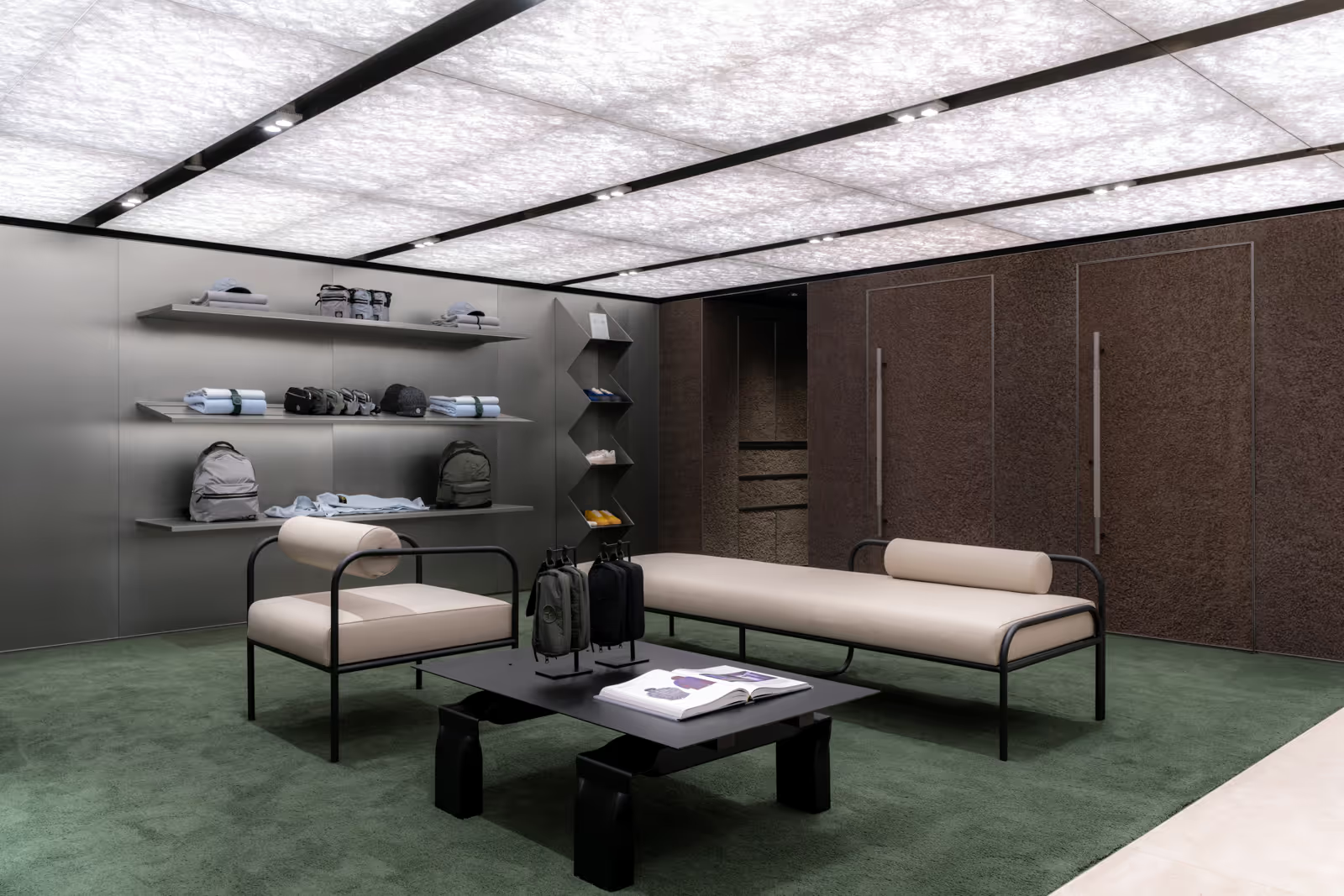
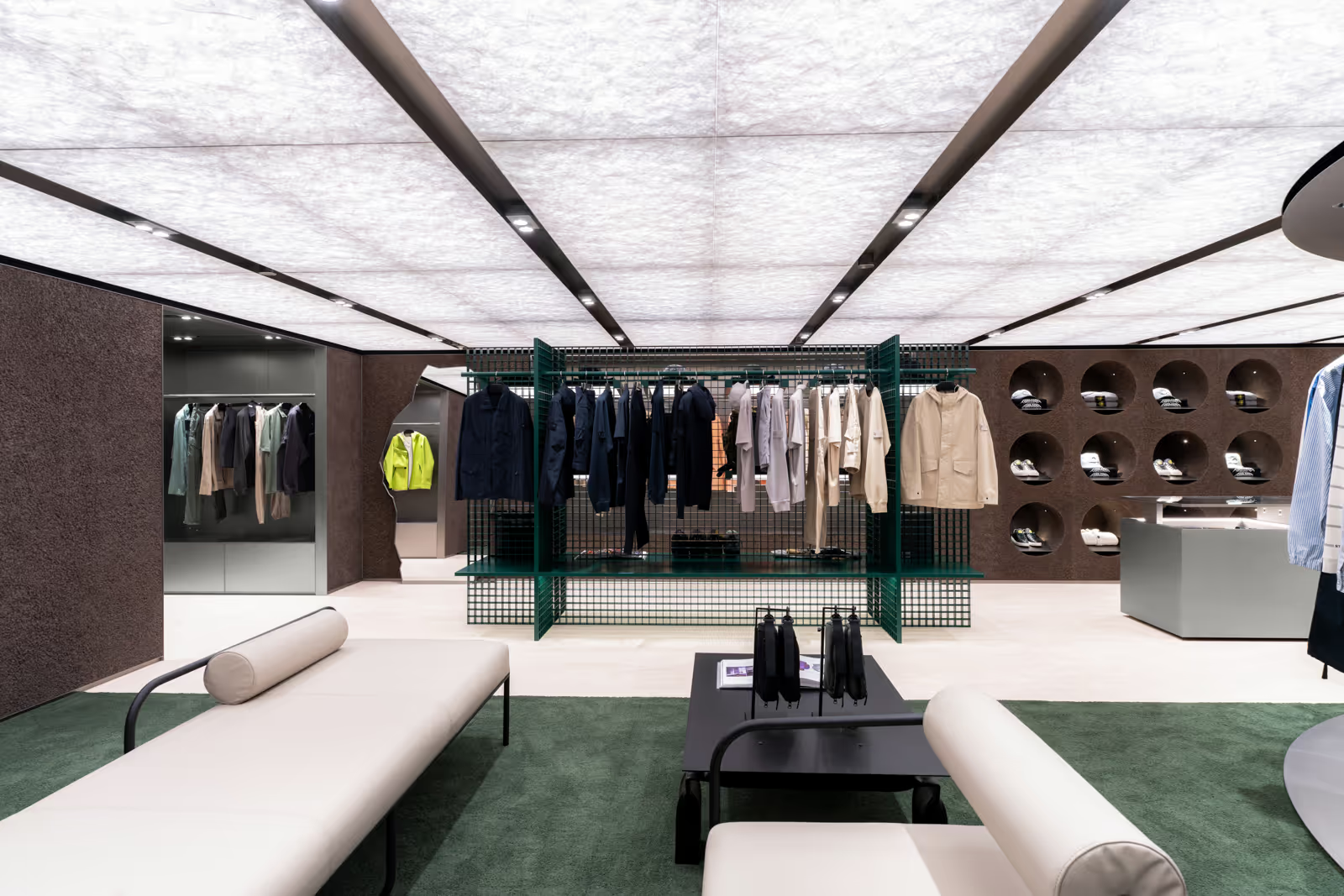
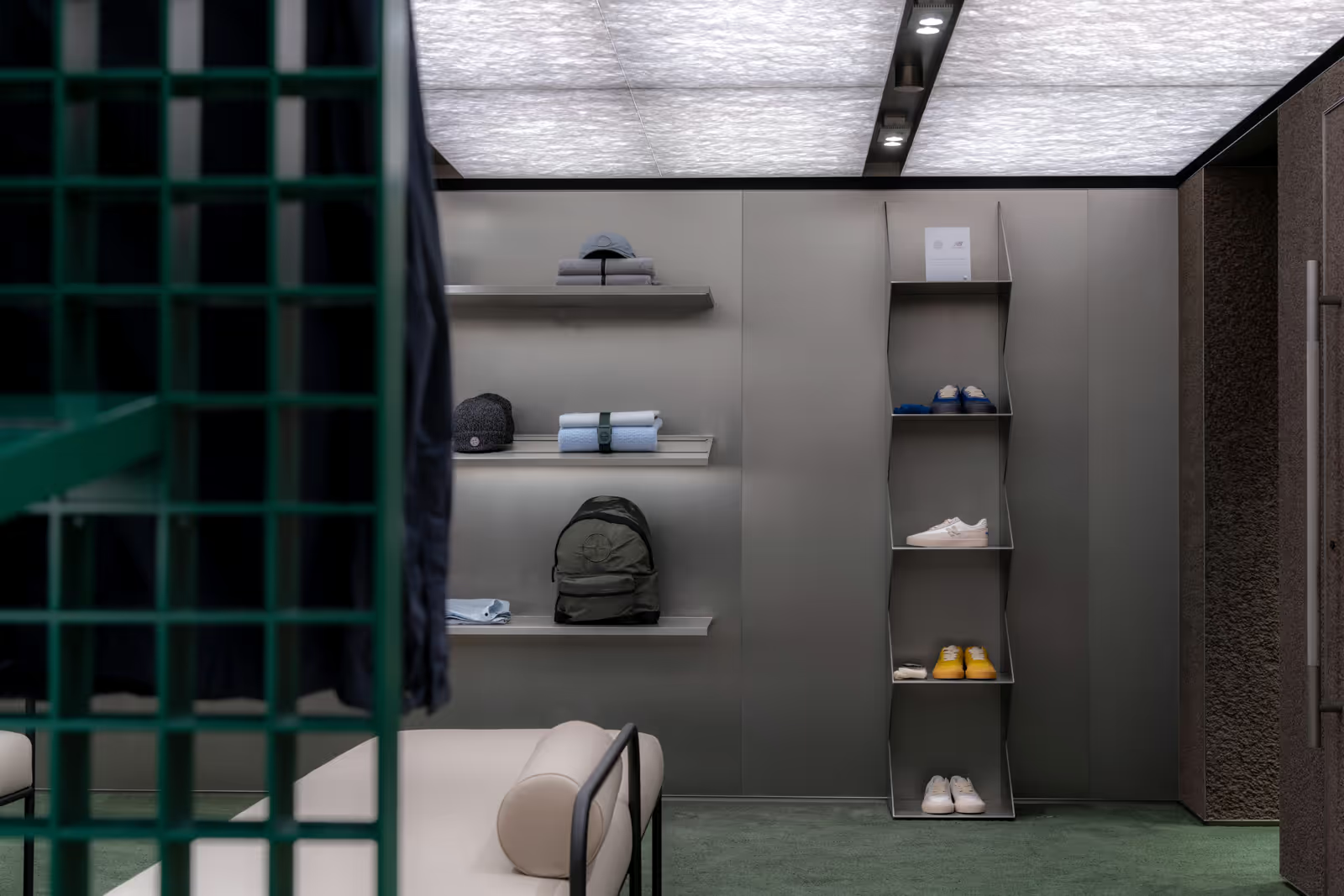
Sergio Mannino Studio was invited by OMA (Office for Metropolitan Architecture) to design a custom daybed and armchair for the new Stone Island flagship store in Hong Kong. Inspired by the studio’s Shiro chair (available in Blue and White Leather), the new pieces feature a striking black matte metal finish that evokes the expressive quality of a sketch’s marker stroke. This collaboration with OMA and Stone Island merges contemporary furniture design with high-concept retail architecture, reinforcing the studio’s global presence in luxury retail environments. Photography by Zhongyi Chan
The Shiro is a chair reduced to almost nothing. A bent chrome tube, a flat seat, a single bolster. Designed first for a pharmacy waiting room in Brooklyn, it has since been remade as a one-person armchair, a loveseat, a long daybed, in leathers and finishes that change with each room. No two versions share a shape. What they share is a method: take an armchair, and remove from it everything that is not carrying the feeling, until what remains is only the part that does.
That method has a long history, and the history is mostly a record of people refusing to admit what the method actually does.
Modernism made the first and cleanest case for subtraction. Strip the ornament, expose the structure, let the bent steel show what steel can do. The tubular chairs of the 1920s, Mies, Breuer, Perriand, were arguments as much as objects: a thing is honest when every part of it is necessary, and beautiful because it is honest. Form follows function. Reduction in the service of use. It is a persuasive doctrine, and the chairs are persuasive, because constraint produces an air of inevitability, the sense that the object could not have been otherwise.
The doctrine breaks on its own monuments. The Barcelona chair is expensive, difficult to build, and not particularly comfortable. The chaise longue is a sculpture you happen to be able to lie on. By the standard of function these should be the failures, and instead they are the icons. Whatever survived the modernist subtraction and made these objects permanent was not their usefulness. It was their proportion, their line, their presence, the part function cannot account for. Modernism reduced in the name of use and produced beauty that use does not explain, and it kept calling that beauty honesty because the alternative was to admit the reason given for the stripping was never the real one.
Donald Judd pushed the same operation further and refused the same admission. Judd removed more than ornament. He removed function, then reference, then composition, then the hand of the maker. The box is fabricated, means nothing beyond its dimensions, stands for nothing. And it works, because that refusal throws you back onto what is actually in front of you: the material, the proportion, the light in the room, your own looking. Reduction past meaning, into pure presence.
It breaks the same way. The box is not silent. It is one of the loudest objects of its century, and it is loud because of what it withholds. The emptiness is a position, and a position speaks whether or not its author allows it to. Judd reduced to escape expression and arrived at its most concentrated form. Past a certain point the bareness stops being an absence and becomes the statement. You cannot strip an object empty enough to make it stop speaking.
So two traditions that present themselves as opposites, the functionalist and the minimalist, make the identical error. Both treat subtraction as a way to remove meaning, one down to use, the other down to mere presence, and both discover that subtraction past a threshold does the reverse. It concentrates meaning. What is taken away stops competing with what remains, and what remains gets louder. Reduction is not how you empty an object. It is how you amplify it.
This is the part neither tradition could say, and the part Shiro Kuramata said first. Kuramata used the cold vocabulary, steel mesh, acrylic, glass, and reduced furniture nearly to vanishing, and what he got was not rigor and not honesty. It was feeling. A chair of expanded metal that is barely there and is unmistakably tender. He ran the industrial method to its end and let it arrive where it was always going to arrive, at emotion, and he did not pretend otherwise. The Shiro takes its name from him because it takes its premise from him: that you strip an object not to make it true and not to make it present, but to clear a space.
Which returns to the chair, and to what is left after everything is removed. The Shiro keeps the tube and the cushion and throws out the rest, and what remains is not a solution to sitting. The proportions solve nothing. The doubling at Medly, two seats set back to back, answered no problem. These are the parts that were kept because they carry something, and the something is not named on the object, because the object is not where it lives.
A reduced form is not a quiet one. It is a cleared one, and a cleared form does not recede. The Shiro holds its own in a room OMA filled with strong things, the way the Barcelona chair holds a room and the Judd box holds a gallery. The subtraction does not make these objects modest. It makes them magnets. They take the attention, all of it, and having taken it they are empty at the center, so the tension they gather has nowhere to settle except in the person standing in front of them. The power pulls you in and the clearing leaves you holding what rises.
That is the whole of it. Form was never following function, and it was never arriving at presence. The reduction was always clearing a space for the thing underneath to come up, and what comes up is not in the chair. Form follows emotions. The chair only makes the room where they surface, and then it makes you the one they surface in.


.avif)
%20IMG_2773_LR%20(1).avif)